For most recreational divers, the Apeks XTX50 set ($625) is the best balance of breathing effort, build, and serviceability in 2026. For divers who want the absolute best breathing performance and don't care about price, the Atomic M1 ($1,350) is genuinely a tier above. For budget reliable, the Hollis 200LX ($440) punches well above its price. Avoid: unsealed piston first stages if you dive cold water or silty wrecks — the failure mode is mid-dive, not on the bench.
The 8 regulator sets worth comparing
This list excludes: single-stage and unbalanced regulators (obsolete for any serious diver), rebreather-specific gear (different category), and the entire sub-$300 rebadged segment (passable for the pool, dangerous past 30m). What’s left are regulators that real instructors and dive-shop owners use as their personal sets.
MK25
Abyss 22
200LX
Sapphire
T10
How they compare visually
Price (lower is better)
The recreational sweet spot is $440–750. Past $750 you’re paying for cold-water capability (Black Sapphire), build materials (Atomic titanium), or brand premium (Scubapro). Most tropical divers don’t need any of those.
Breathing effort (lower is better — measured in joules per litre at 50m / 62.5 RMV per EN250)
EN250 caps recreational regulators at 3.0 J/L. Anything under 1.0 J/L is genuinely impressive. The real-world difference between 0.6 and 1.0 J/L is noticeable in high-RMV moments (heavy current, deep cold, exertion) but invisible during a relaxed reef dive at 18m. Don’t pay 2x the price for a 0.4 J/L improvement you won’t feel.
Weight (lower is better for travel — full set, 1st + 2nd stage)
200g difference between the Atomic M1 and Scubapro MK25 set is real on a long travel itinerary. The titanium internals on the Atomic save weight you can use for spare parts and a backup mask.
Detailed per-regulator verdicts
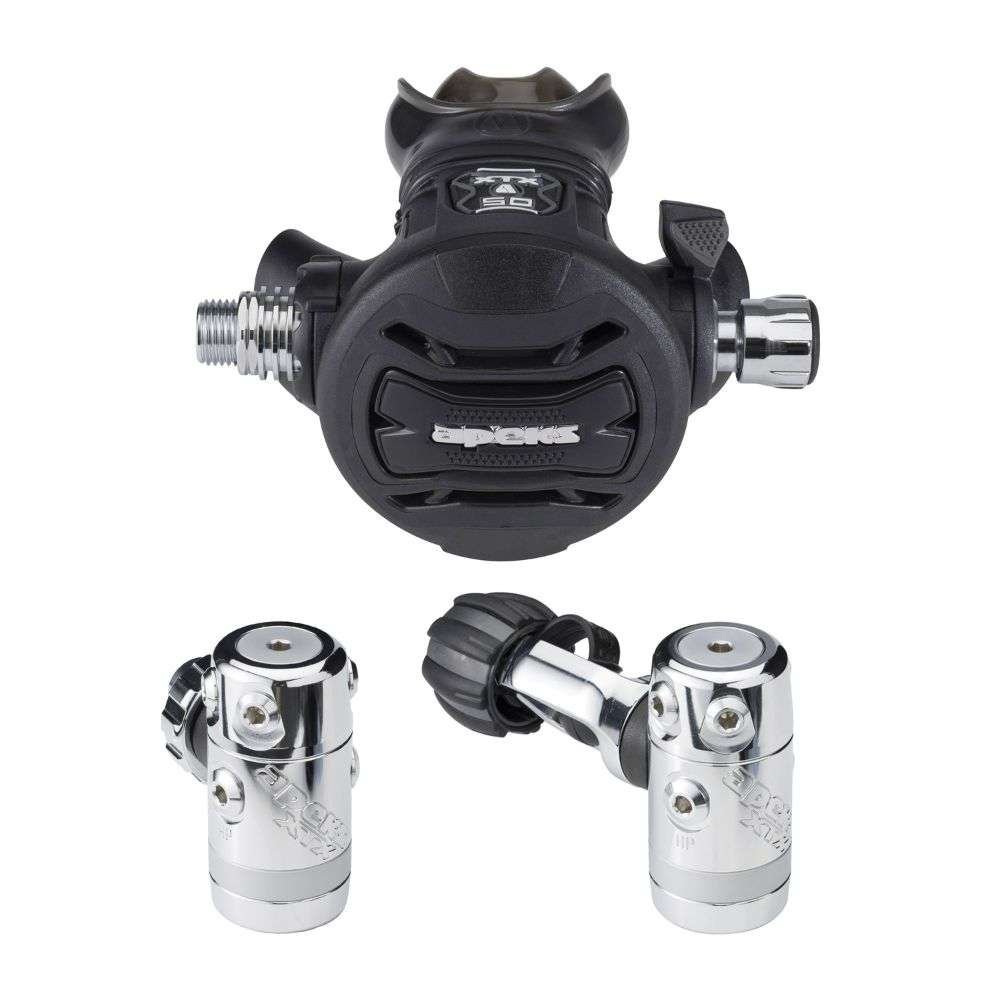
Apeks XTX50 + XTX50
Best balance 2026
$625 · 21,900 THB
Balanced diaphragm · environmental seal · 2 HP / 4 LP · DIN or yoke · 12-month service
Apeks XTX50 + XTX50 — best balance in 2026
The XTX50 launched as the workhorse model in Apeks’ range and never left. By 2026 it’s the regulator on more dive-instructor consoles in Europe and Asia than any other model. The 4 LP ports include an angled fifth-port option that routes hoses cleanly for any configuration.
What’s good:
- Balanced diaphragm with environmental seal — dives silty wrecks and cold water without modification
- Breathing effort of 0.9 J/L is genuinely impressive for the price
- Cold-water rated to under 4°C straight from the box
- 4 LP ports and 2 HP ports cover every accessory you’ll ever need
- Apeks service network in Asia is the best of any premium brand
- Modular: any Apeks 1st stage pairs with any Apeks 2nd stage, mix and match
- Service kits are widely available and not absurdly priced
What’s missing:
- Heavier than the Atomic or Aqualung Legend at 1.0kg
- The XTX50 second stage requires more bench-time during annual service than simpler designs
- No “lifetime” service deal — just standard 12-month service like everyone else
Best for: any recreational-to-tech-curious diver who wants one regulator for the next 10 years across warm and cold water. The XTX50 is the rare regulator that does exactly what it advertises with no compromises in its category.
Skip if: you need the absolute lowest breathing effort (Atomic M1) or want the lightest possible travel set (Aqualung Legend LX).
MK25 EVO
image pending
Scubapro MK25 EVO + A700
Premium piston
$1,200 · 42,000 THB
Balanced piston · XTIS cold protection · 2 HP / 5 LP swivel turret · metal A700 second stage
Scubapro MK25 EVO + A700 — premium piston
The MK25 has been Scubapro’s flagship 1st stage since 1996. The EVO update keeps the original balanced-piston design with refinements to the anti-freeze kit. The A700 second stage is metal-bodied — heavier than plastic but feels indestructible.
What’s good:
- Balanced piston design is the most responsive 1st stage type — air delivery feels effortless
- A700 metal 2nd stage is the most durable in the category
- Breathing effort of 0.7 J/L is best-in-class for a non-titanium regulator
- 5 LP ports allow any configuration including doubles
- Scubapro’s global service network rivals Apeks
What’s missing:
- $1,200 is genuinely expensive — you’re paying for the brand and the metal 2nd stage
- The MK25 is not environmentally sealed by default — cold-water diving requires the optional anti-freeze kit ($120) and yearly service of that kit
- Piston design (vs diaphragm) lets silt and salt enter the 1st stage — service intervals matter more
- A700 second stage is heavier than plastic alternatives — neck fatigue on long dives
Best for: divers who’ll be on regular Caribbean / Maldives / Egypt liveaboards and want the most refined breathing of any non-titanium regulator. Worth it if you’ll keep it 10+ years.
Skip if: you dive cold water more than 2-3 times a year (get the Apeks Black Sapphire instead) or you’re price-sensitive (the XTX50 is 80% of the regulator at 50% of the price).
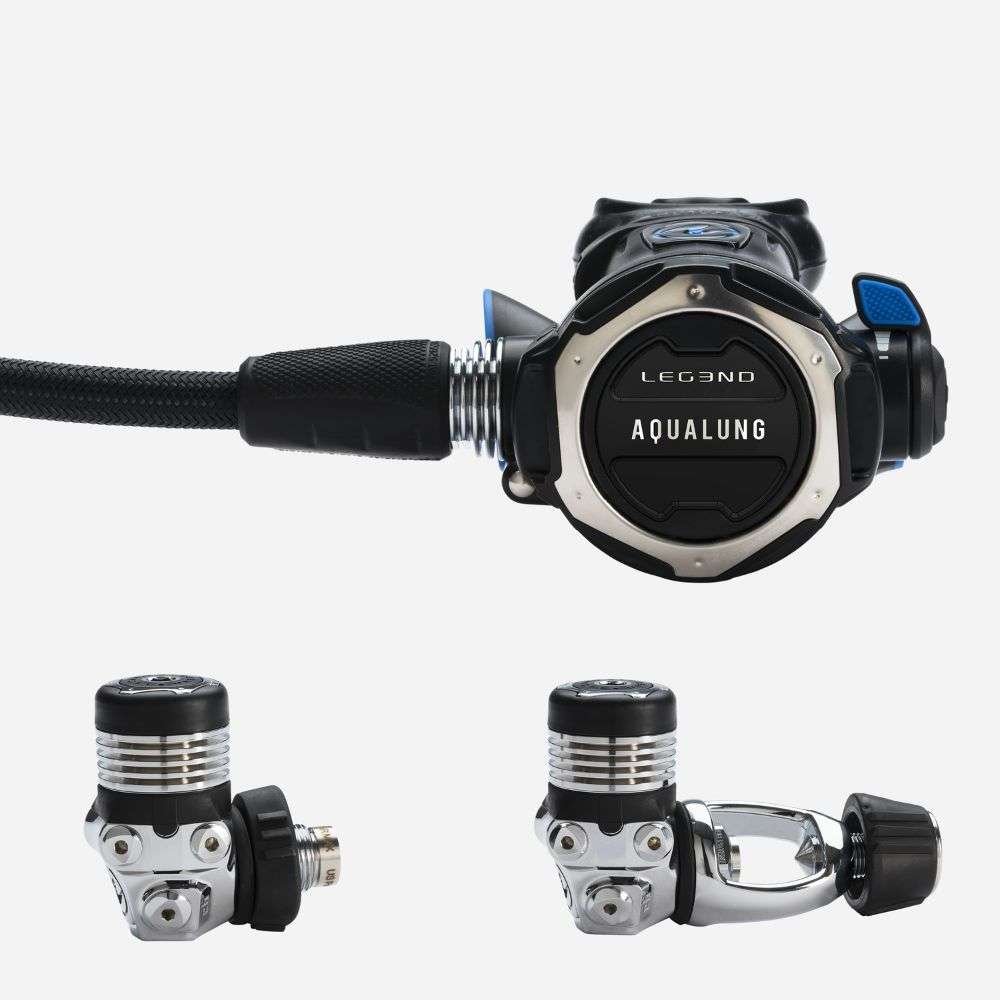
Aqualung Legend LX
ACD-equipped diaphragm
$750 · 26,300 THB
Balanced diaphragm · ACD auto-closure · 1 HP / 4 LP · 24-month service · MBS adjustment
Aqualung Legend LX — ACD-equipped diaphragm
The Legend has been Aqualung’s flagship for 20+ years. The LX update added ACD (Auto Closure Device) — a one-way valve in the 1st stage inlet that closes automatically when you disconnect the tank, preventing water and dust from entering the regulator.
What’s good:
- ACD genuinely works and prevents the most common cause of unscheduled service (water in 1st stage)
- Balanced diaphragm — environmental seal included
- 0.9kg total weight is the second-lightest set here
- 24-month service interval through Aqualung dealers (most others are 12-month)
- Wide global dealer network
What’s missing:
- Only 1 HP port — annoying if you want a transmitter AND a console with HP gauge
- Breathing effort of 1.0 J/L is fine but not class-leading
- ACD adds a (small) failure point that doesn’t exist on other regs
- $750 is mid-range premium pricing — you’re paying for ACD and dealer network, not breathing performance
Best for: divers who travel frequently and want the longest service interval. Divers who’ve had previous regulators damaged by dust or water ingress.
Skip if: you want air integration (1 HP port limits you) or you’re chasing the lowest breathing effort.
Abyss 22
image pending
Mares Abyss 22
Twin-2nd-stage standard
$695 · 24,400 THB
Balanced piston · Vortex Assisted Design · Mesh Grid anti-freeflow · cold-water version available
Mares Abyss 22 — twin-2nd-stage standard
The Abyss 22 is Mares’ technical-capable recreational regulator. The notable feature: it ships standard with TWO identical 2nd stages — your primary and your octopus are the same model, not the cheap “octo-only” version most brands include. This means equally good breathing effort on your alternate air source.
What’s good:
- Two identical Abyss 22 second stages is genuinely useful — your backup breathes as well as your primary
- Balanced piston 1st stage with good breathing effort
- Mares’ service kit pricing is competitive
- Italian engineering and aesthetics if that matters
- Cold-water-rated version available
What’s missing:
- Twin 2nd stages add weight (1.0kg total, comparable to Apeks)
- Piston 1st stage isn’t environmentally sealed unless you upgrade to the Abyss Extreme model
- Mares dealer support in Asia is patchy outside the major dive hubs
- Software documentation and parts schematics are harder to find than Apeks or Scubapro
Best for: divers who actually want a backup regulator that breathes as well as the primary — useful for instructors, dive masters, and anyone doing photo-heavy dives where the buddy might suddenly need air.
Skip if: you only dive in major tourist hubs (service is harder to come by) or you don’t care about the twin-2nd-stage feature.
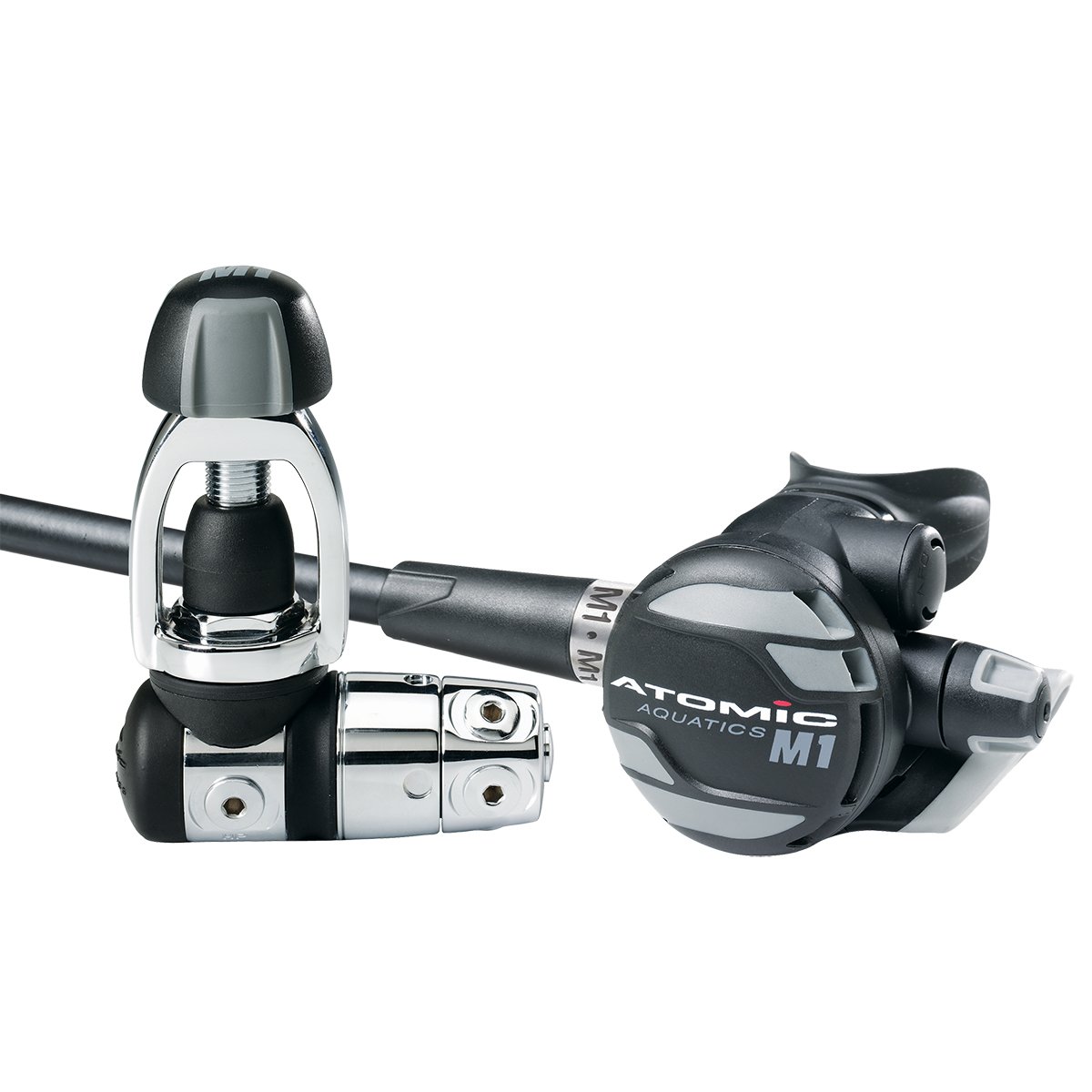
Atomic Aquatics M1
Titanium top-tier
$1,350 · 47,300 THB
Balanced piston (titanium) · fully sealed · 2 HP / 7 LP · best-in-class breathing effort · 24-month service
Atomic Aquatics M1 — titanium top-tier
Atomic Aquatics is a small US manufacturer that builds regulators with titanium internals. The M1 is their flagship. Lifetime-sealed first stage means no annual service for the 1st stage internals — you only service the 2nd stage and the diaphragms.
What’s good:
- Breathing effort of 0.6 J/L is genuinely class-leading
- Titanium internals are immune to corrosion — saltwater is a non-issue
- Lifetime sealed 1st stage — Atomic’s “annual service” is just a flush and 2nd stage inspection
- 0.85kg total weight is the lightest premium regulator on the market
- 7 LP ports support any technical configuration
- Real “buy once, cry once” choice — these regulators last 20+ years
What’s missing:
- $1,350 is the highest price in this comparison
- Atomic service network outside the US is sparse — most servicing in Asia means shipping to a regional hub
- The lifetime-sealed claim depends on you following the rinse protocol after every dive (which most divers don’t)
- Some replacement parts (custom titanium springs) are 6+ weeks to source outside the US
- Brand recognition outside North America is low — dive shop staff in Asia won’t know it
Best for: divers who want the best breathing performance available and will keep the regulator for 20+ years. Divers who dive saltwater heavily and want corrosion immunity. Photographers and instructors who want one piece of gear they never have to think about.
Skip if: you can’t access Atomic service in your region, or you’d rather have $700 in your pocket for a regulator that breathes 90% as well (Apeks XTX50).
200LX
image pending
Hollis 200LX + DCX
Budget reliable
$440 · 15,400 THB
Balanced piston · PVD-plated brass valve · convertible right/left-hand hose · lifetime warranty, parts for life
Hollis 200LX — budget reliable
Hollis is a US technical-diving brand that also makes recreational gear. The 200LX is their entry-level set — balanced piston 1st stage with their proven 200LX 2nd stage. Same internal design as their more expensive models, just plastic exterior instead of metal.
What’s good:
- $440 is the cheapest premium-brand regulator here
- Same internal balanced piston design as Hollis’ tech-rated 500SE
- Reliable, simple, easy to service
- 2 HP / 4 LP ports cover all standard configurations
- Hollis service parts are inexpensive
- Plastic exterior keeps weight down (1.05kg)
What’s missing:
- Not environmentally sealed — silty wrecks and cold water are off-limits without modification
- Breathing effort of 1.1 J/L is good for the price but noticeably more work at depth than the Apeks XTX50
- Hollis brand recognition outside the US is limited
- Plastic 2nd stage feels less premium than Aqualung or Scubapro
- No fancy features (no ACD, no twin 2nd stages, no titanium)
Best for: divers who’ll dive 95% warm-water tropical recreational and want a no-nonsense regulator that just works. New divers buying their first regulator who don’t want to spend $700+.
Skip if: you’ll dive cold water, silty wrecks, or technical environments. Get the Apeks XTX50 instead — it’s $185 more for proper sealing.
Black Sapphire
image pending
Apeks Black Sapphire
Cold-water specialist
$895 · 31,300 THB
Balanced diaphragm (sapphire-lined) · cold-water rated · PVD coating · 1st + 2nd stage swivel · limited edition
Apeks Black Sapphire — cold-water specialist
The Black Sapphire is the same XTX-family chassis as the XTX50 but with sapphire-lined chambers and Apeks’ premium cold-water sealing. It’s the regulator British, Norwegian, and Canadian dive instructors trust for under-3°C diving.
What’s good:
- Sapphire-lined chambers eliminate the freezing pathway that kills standard cold-water regs
- Rated for water temperatures of 0°C and below — actual ice diving
- Same Apeks parts compatibility as the XTX50 (use the same service kits, hoses, etc.)
- 0.8 J/L breathing effort is excellent and stays that way in cold water
- Looks distinctive — black PVD finish
What’s missing:
- $895 is a steep premium over the XTX50 ($625) — you’re paying $270 for the cold-water rating
- The sapphire lining is overkill for any warm-water diving — you’ll never feel the benefit
- Slightly heavier than XTX50 at 1.05kg
- The black PVD coating shows scratches more visibly than the XTX50’s anodised finish
Best for: divers who’ll spend at least 5–10 dives per year in water below 10°C, or anyone planning ice / drysuit diving. Cold-water instructors.
Skip if: you dive exclusively warm tropical water — the XTX50 gives you the same breathing performance for $270 less.
Master T10
image pending
Cressi Master T10
Italian value
$475 · 16,600 THB
Balanced piston · environmentally sealed 1st stage · master 2nd stage heat exchanger · cold-water capable
Cressi Master T10 — Italian value
The Master T10 is Cressi’s flagship recreational regulator. Balanced piston 1st stage with their MC9 2nd stage. Cressi has been making regulators since the 1940s and the brand’s quality control is genuinely good for the price.
What’s good:
- $475 is competitive with the Hollis 200LX while being a more established brand
- Solid build, Italian engineering aesthetic
- Wide dealer network in Europe and Asia (especially Thailand and Egypt)
- Service parts inexpensive and widely available
- 2 HP / 4 LP ports cover all standard configurations
What’s missing:
- Breathing effort of 1.3 J/L is the highest in this list — noticeably more work than Apeks or Scubapro at depth
- Not environmentally sealed standard
- The MC9 2nd stage is plastic and feels less premium than Apeks or Aqualung
- 12-month service like everyone else, no advantages
Best for: budget-conscious recreational divers in Cressi-strong markets (Italy, Thailand, Egypt) who want established-brand service support.
Skip if: you want the lowest breathing effort, or you dive cold water. The Hollis 200LX is $35 cheaper and breathes slightly better; the Apeks XTX50 is $150 more and is in a different league.
Why breathing effort matters more than brand
EN250 (the European recreational regulator standard) caps work-of-breathing at 3.0 J/L at 50m depth and 62.5 RMV. Every regulator in this comparison is well under that limit.
The real-world performance difference between 0.6 J/L (Atomic M1) and 1.3 J/L (Cressi T10) is roughly equivalent to climbing a flight of stairs while breathing through a slightly-pinched straw. You don’t notice it on a relaxed reef dive at 18m. You absolutely notice it at 35m fighting current with elevated heart rate.
A useful rule: if you’ll regularly dive past 25m, in current, or in cold water — every 0.2 J/L matters and you should buy as low as you can afford (Atomic, Scubapro, Apeks Black Sapphire). If you’ll mostly dive shallow tropical at relaxed pace — 1.0 J/L is fine and the extra money is wasted.
Brand matters less than design type. A balanced piston regulator from any major manufacturer breathes better than an unbalanced regulator from the same brand. A diaphragm regulator with environmental seal beats an unsealed piston in cold water regardless of price.
Cold-water sealing — when you actually need it
Cold-water sealing protects the 1st stage from freezing. When you breathe heavily at depth in cold water, the air in your 1st stage cools dramatically (pressure drop = temperature drop). If water enters the regulator’s spring chamber, it can freeze and lock the 1st stage open — a continuous freeflow that drains your tank in 60 seconds.
Environmental sealing (diaphragm regs only) puts a non-water-conducting fluid in the spring chamber. No water = no freezing.
Piston regulators (Scubapro MK25, Mares Abyss, Hollis 200LX) need an anti-freeze kit to achieve the same protection. The kit is an extra $120 + annual service.
When do you actually need it?
- Water below 10°C: yes, always.
- Water 10–15°C with high exertion (drift diving, photographer chasing subjects): yes.
- Water 15–20°C tropical liveaboard: no, but it doesn’t hurt.
- Water above 20°C: no, never required for safety. (Some people still prefer sealed for silt/grit reasons in muddy wrecks.)
If you’ll dive 90% tropical and 10% temperate, get a sealed diaphragm regulator (Apeks XTX50, Aqualung Legend, Apeks Black Sapphire). It costs the same as an unsealed piston and removes the question.
Yoke vs DIN — does it matter in practice
Yoke (a.k.a. A-clamp): the universal recreational fitting. Clamps over the tank valve. Found on every rental tank in tropical destinations (Caribbean, Thailand, Egypt, Indonesia).
DIN (Deutsche Industrie Norm): the European technical fitting. Screws into the tank valve. Found on European tanks, technical-diving tanks worldwide, and increasingly on premium recreational liveaboards.
What actually matters:
- Most regulators sell as DIN by default, with a yoke adapter included or available cheap ($25)
- A DIN regulator with a yoke adapter is more versatile than a yoke regulator (which can’t easily convert to DIN)
- Yoke has a higher failure rate at depth — the O-ring is external and exposed to compression
- DIN is rated for higher tank pressures (300 bar) which matters for technical diving
The practical answer for 2026: buy any regulator in DIN, keep a yoke adapter in your save-a-dive kit. You’ll handle every tank you encounter and you’ll have the more reliable connection most of the time. The cost difference is $0–25.
Avoid: buying a regulator in yoke-only configuration. Many brands now charge MORE for yoke-only because it limits future upgradeability.
What to skip
Unbalanced regulators. Anything sold as “single-stage” or with “unbalanced” in the spec sheet. Old technology. Breathing effort triples at depth. Skip even if the price seems great.
Sub-$300 “complete regulator sets” on AliExpress. The internals are knockoff parts of unknown provenance. Some work fine for 100 dives. Some fail dramatically at 30m. The savings are not worth the risk. Use a rental regulator until you can afford a $400+ set.
Used regulators older than 10 years. Even with documented service history, the rubber diaphragms and o-rings have a finite shelf life. A 12-year-old regulator that “looks fine” can fail mid-dive when an aged diaphragm tears. If you buy used, look for units under 6 years old with service records from the last 2 years.
“Tech regulators” marketed to recreational divers. Scubapro MK17, Apeks Tek3, Atomic T3. These exist for technical doubles diving. They work fine for recreational but you’re paying for stage-bottle ports and double-tank manifold compatibility you’ll never use. Buy a recreational model and upgrade to tech only when you actually need it.
Octo-only “alternate air source” regulators. Aqualung Calypso, Mares R2S Octo, etc. They breathe noticeably worse than the primary. If you can afford it, run a twin-2nd-stage setup (like the Mares Abyss 22) or buy a matched 2nd stage as your octopus. The diver borrowing your air in an emergency deserves a regulator that breathes properly.
Real-world reliability ranking
Based on dive-shop feedback and bench-service records (failures = either fail-dangerous mid-dive or fail-during-service requiring extra parts):
- Atomic Aquatics M1 — near-zero failures, lifetime-sealed design genuinely works
- Apeks XTX50 — solid, occasional 1st stage o-ring replacement at annual service, no field failures
- Aqualung Legend LX — ACD prevents most service-causing problems, very reliable in field
- Scubapro MK25/A700 — reliable if anti-freeze kit is maintained; failures are mostly user-caused (skipped service)
- Mares Abyss 22 — reliable in field, occasional 2nd stage diaphragm issues at year 5+
- Apeks Black Sapphire — same chassis as XTX50, near-identical reliability
- Hollis 200LX — reliable for the price, plastic exterior shows wear faster than metal-bodied options
- Cressi Master T10 — reliable but breathing degrades over time more visibly than premium models
Where to actually buy in Thailand
- Lazada Thailand — Aqualung, Mares, Cressi at fair price, beware grey-market without warranty
- Apeks dealers in Bangkok and Phuket — best place to fit and service Apeks regulators
- Scubapro dealers in Bangkok, Phuket, Pattaya — only place to properly service MK25
- Dive shops on Koh Tao, Koh Phi Phi, Koh Samui — service available, limited stock for sale
- Atomic Aquatics and Hollis — order online, expect 4–6 weeks to Thailand and customs fees
- Cressi — wide availability across Thailand, fair prices
For warranty service, always buy through an authorised dealer. Grey-market saves 10–15% but the warranty becomes “ship back to country of purchase” which kills the savings on a regulator you’ll service annually.
Verdict
If we had to pick one regulator for a friend without knowing their situation: Apeks XTX50 + XTX50 set ($625). Best balance of breathing effort, sealing, port count, service network, and price. Most divers won’t outgrow it for the next decade.
For divers who want the best breathing performance and lowest weight: Atomic Aquatics M1 ($1,350). Worth it if you’ll keep it 15+ years and can access service.
For budget tropical-only: Hollis 200LX ($440). Genuinely good, just don’t take it cold or silty.
For cold-water specialists: Apeks Black Sapphire ($895). The XTX chassis you already trust, with the sealing you actually need.